How to clean a yoga mat in 10 simple minutes
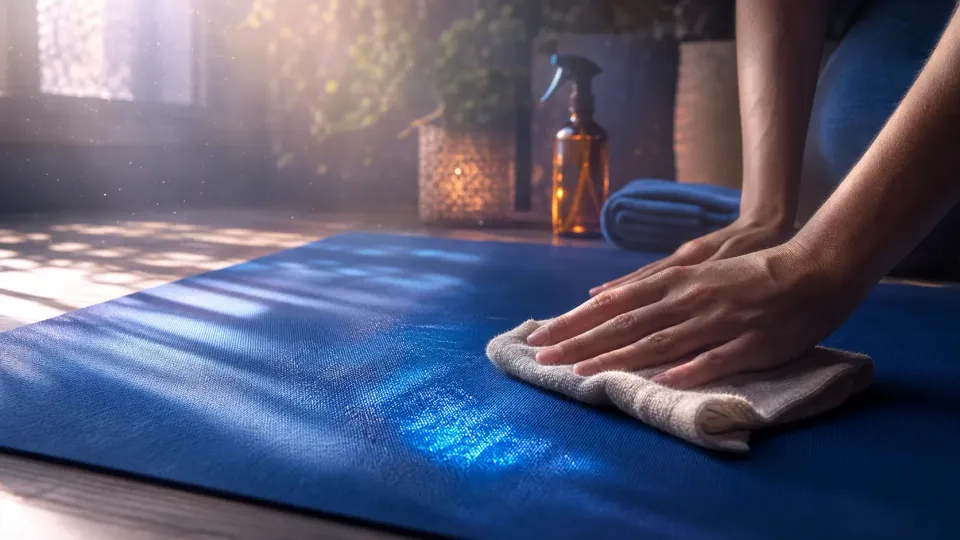

How to clean a yoga mat: use warm water, 2 to 4 drops of mild dish soap, a soft cloth, a clean-water rinse, and full air drying before you roll it again.
To clean a yoga mat, wipe both sides with warm water, 2 to 4 drops of mild dish soap, and a soft cloth, rinse with a clean damp cloth, then air-dry it fully before rolling. The counterintuitive part: the 10-minute wipe-down is usually not what prevents funk, the hours of open-air drying afterward often matter more. Roll a damp PVC, TPE, polyurethane, or natural rubber mat too soon, and moisture can get trapped between the layers, where odor-causing residue may build before your next practice.
Slowdive is a calm-tech companion — guided meditations, breathing practices, and sound therapy crafted for everyday balance.
Find your meditation match in 60 seconds
How to clean a yoga mat at home: the 10-minute routine
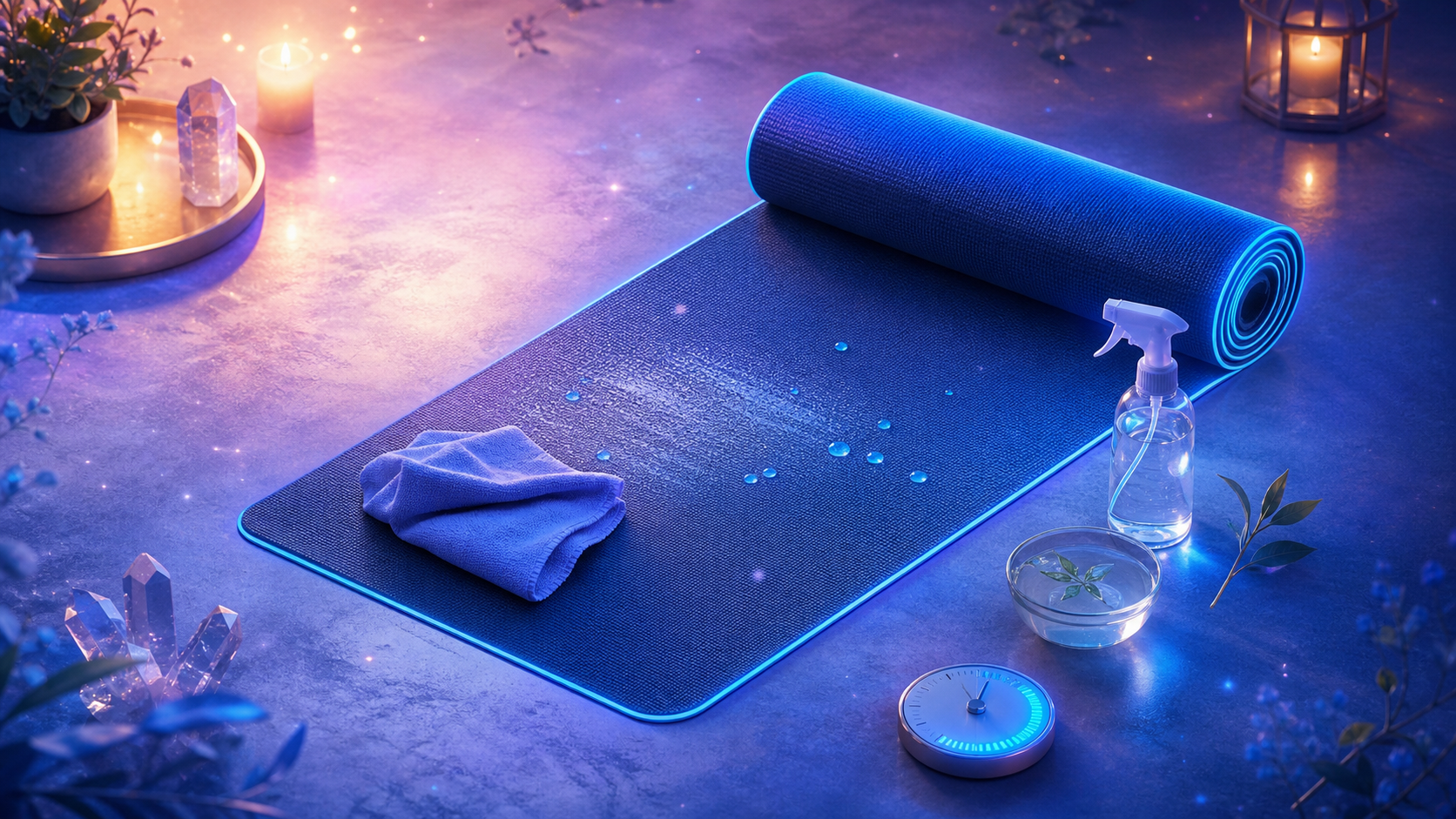

A generally safe at-home routine is a two-sided wipe with a lightly soapy cloth, a clean-water rinse pass, and open-air drying over a shower rod, clothes rack, or clean towel.
This 10-minute method is for routine cleaning after sweat, studio floors, or rolling a mat after class. The active cleaning takes about 10 minutes; the drying window can take several hours, especially for thick, open-cell, or natural rubber mats.
Before adding cleaner, match the method to the mat material because PVC, TPE, natural rubber, cork, jute, and polyurethane-coated mats can react differently to water, soap, vinegar, oils, and heat.
What you’ll need
- A clean microfiber cloth or small cotton towel
- A spray bottle or bowl
- 1 cup of warm water
- 2 to 4 drops of mild dish soap
- A second damp cloth for rinsing
- A shower rod, clothes rack, shaded balcony rail, or clean towel for drying
Use the gentlest cleaning method first if the yoga mat material is unknown; a lightly damp cloth is usually safer than soaking when you cannot tell whether the mat is open-cell or closed-cell.
Natural rubber yoga mats tend to be more sensitive to UV light, essential oils, vinegar, and heat than many PVC yoga mats because rubber can oxidize, dry out, or lose grip.
Open-cell yoga mats absorb sweat and cleaner through tiny pores, while closed-cell mats keep most liquid on the surface and usually need less water.
If a yoga mat has a care label or brand instructions, follow those instructions before any blog recipe.
Lululemon’s mat care guidance tells customers to clean its yoga mats with warm water and lemon juice or baking soda and to keep the mats out of direct sunlight (lululemon mat care).
Manduka’s mat care guidance separates instructions by mat material, which matters because the PRO series, eKO natural rubber mats, and GRP absorbent mats do not all tolerate the same cleaners (Manduka mat care).
Once the mat’s material limits are clear, remove dry grit first so the cloth is less likely to grind floor debris into the grip surface.
Minute 1: Shake off the obvious stuff
Shake the yoga mat before adding liquid so hair, lint, sand, dried sweat flakes, and studio-floor grit do not turn into muddy surface grime.
Take the yoga mat outside, into a hallway, or over the bathtub where loose debris can fall without spreading across a clean floor.
Give the mat 2 or 3 firm shakes from the short end, then rotate it and shake from the opposite end.
Pick off stuck crumbs, pet hair, or visible debris by hand before using water.
With loose grit gone, the soap can focus on breaking up skin oil and sweat residue instead of dragging abrasive particles across the mat’s texture.
Minutes 2 to 3: Mix a gentle cleaning solution
A reliable routine cleaning solution is 1 cup of warm water mixed with 2 to 4 drops of mild dish soap.
Use this ratio:
1 cup warm water + 2 to 4 drops mild dish soap
Use drops of soap, not a squeeze or generous drizzle, because excess surfactant can leave a slick film that may reduce grip under sweaty palms.
Too much soap can make a yoga mat slippery during Downward-Facing Dog, gummy after drying, or tacky in a way that collects lint.
Wirecutter’s yoga-mat cleaning guidance recommends 1 cup of warm water with 2 to 4 drops of dish soap for routine cleaning (Wirecutter).
If using a bowl, swirl the mixture gently so it does not foam.
If using a spray bottle, shake once or twice rather than turning the solution into suds.
Essential oils are optional, but peppermint, tea tree, lavender, or citrus oil can linger where the forehead, cheek, or nose touches the mat.
Apply the cleaner lightly, with extra attention to the hand zone, foot zone, and forehead area.
Minutes 4 to 6: Wipe the top side
Wipe the top side of the yoga mat with a lightly damp, soapy cloth using long passes from the short edge to the opposite short edge.
Spray the cloth instead of the mat if the mat is open-cell, absorbent, cork-faced, jute-blended, or unknown.
A light spray directly on a closed-cell PVC or TPE yoga mat is often easier to control because the cleaner tends to stay on the surface instead of soaking in.
Focus on the highest-contact areas:
- Hand placement near the front third of the mat
- Foot placement near the back third of the mat
- Forehead, chest, and cheek area near the center line
A soft cloth and steady pressure are usually enough for ordinary sweat, skin oil, lotion residue, and dust.
Do not scrub a yoga mat aggressively unless the brand instructions allow it; hard brushing can rough up polyurethane coatings, cork surfaces, and natural rubber texture.
The yoga mat should look evenly damp, not wet enough to drip.
After the practice side is clean, clean the underside because that side collects floor residue from studio floors, sidewalks, car trunks, and entryways.
Minute 7: Flip and repeat
Clean the underside because it touches the floor and can transfer dirt back onto the practice side when the mat is rolled.
Flip the yoga mat over on a clean towel or freshly wiped floor.
Wipe the underside with the same 1-cup-water and 2-to-4-drop soap solution.
Studio floors can pick up residue from shoes, bare feet, blocks, straps, gym bags, mop water, and water bottles.
If the underside has a raised dot, wave, or grid texture, move the cloth lengthwise and crosswise so the fibers can reach into the grooves.
Once both sides have been wiped, remove soap residue before it dries into a potentially slippery film.
Minute 8: Rinse with a damp cloth
Rinse the yoga mat by wiping both sides with a second cloth dampened with clean water.
Wet the second cloth with plain water from the sink.
Wring it out until it is damp rather than dripping.
Wipe the top side and underside once more, especially the hand and foot zones.
Do not skip the rinse step because dish soap is a surfactant, and leftover surfactant can reduce friction between the mat and your hands.
Soap residue can make a yoga mat slippery, gummy, or tacky under the palms during plank, chaturanga, or Downward-Facing Dog.
With the cleaner removed, the remaining job is mostly moisture control, not more scrubbing.
Minutes 9 to 10: Towel it, then let it dry open
Dry the yoga mat by pressing it with a towel, then leaving it open until the surface and edges are fully dry.
Press a dry towel over the yoga mat to pull off surface water without twisting, wringing, or stretching the material.
Hang the yoga mat over a shower rod, clothes rack, shaded balcony rail, or the backs of 2 chairs so air reaches both sides.
A yoga mat can also dry flat on a clean towel if there is enough floor space and the towel is swapped when damp.
Do not roll a damp yoga mat because the roll creates a dark, low-airflow pocket where sweat residue and moisture sit against each other.
Rolling a damp yoga mat is one common way to create sour odor, especially after hot yoga or a humid studio class.
According to the U.S. Centers for Disease Control and Prevention, cleaning removes dirt and some germs from surfaces, while disinfecting uses chemicals to kill germs on surfaces (CDC).
Routine yoga mat cleaning is usually enough for everyday personal use when you are not sick and no one else is using the mat.
Yoga mat disinfection is a separate process because disinfectants need the correct chemical, surface compatibility, and wet contact time.
That cleaning-versus-disinfecting distinction matters when considering popular home options like white vinegar.
What about vinegar?
Diluted white vinegar can help deodorize some yoga mats, but it is not the best cleaner for every mat and should not be treated as a registered disinfectant.
A common home deodorizing ratio is 1 part white vinegar to 3 parts water.
Use a diluted vinegar solution lightly on the cloth rather than soaking the mat.
Wipe the vinegar solution off after use with a clean damp cloth.
Dry the yoga mat fully before rolling so vinegar smell and moisture do not get trapped inside the roll.
If the goal is to clean a yoga mat naturally, warm water and mild dish soap are usually the simplest low-scent option because they remove sweat, skin oil, and dust without adding a strong smell.
Natural rubber yoga mats can be sensitive to vinegar, essential oils, strong cleaners, and prolonged sunlight because those exposures may dry, discolor, or weaken rubber.
JadeYoga’s FAQ for natural rubber mats tells customers not to put its mats in the washing machine or dryer and to avoid prolonged direct sunlight (JadeYoga FAQ).
Vinegar should not be treated as a reliable disinfectant for shared mats, illness, ringworm concerns, athlete’s foot concerns, or questionable public floors.
If true disinfection is needed, use a mat-safe disinfectant and follow the product label contact time, which may require the surface to stay visibly wet for several minutes.
According to the EPA’s overview of selected EPA-registered disinfectants, disinfectants are registered for specific uses and organisms, and the label determines how the product must be used.
Vinegar is one common shortcut people ask about; washing machines are another, and machine washing can create a bigger risk for mat coatings, seams, and drying time.
Can you clean a yoga mat in the washing machine?
Some yoga mats can be cleaned in a washing machine, but only when the mat manufacturer says machine washing is safe for that specific model.
A washing machine can damage yoga mat edges, separate layers, scuff grip coatings, and stretch foam or rubber under agitation.
It can also leave a yoga mat waterlogged, which turns a 10-minute cleaning job into a 24-hour or 48-hour drying problem.
If the manufacturer allows machine washing, use cold water, a tiny amount of mild detergent, and no spin cycle if the washer settings allow that control.
Never put a yoga mat in the dryer unless the brand explicitly says dryer use is safe.
Dryer heat can warp PVC, crack rubber, loosen adhesives, and damage textured grip surfaces.
Machine washing is especially risky for natural rubber mats, cork mats, jute-blend mats, and mats with absorbent polyurethane top layers.
Curious about where to begin? A short check-in maps your stress baseline and suggests a personalised practice plan.
When a mat is too dirty for a quick wipe but too delicate for a washing machine, a controlled bathtub clean is usually the safer reset.
When your mat needs more than 10 minutes
A yoga mat likely needs a deeper clean when it smells sour, feels grimy, has visible sweat buildup, or has gone several weeks of heavy use without a thorough cleaning.
For a deeper clean, use the bathtub method instead of aggressive scrubbing.
Fill a bathtub with cool or lukewarm water.
Add a small amount of mild soap, using less detergent than you would for laundry.
Submerge the yoga mat for a few minutes if the manufacturer allows soaking.
Wipe both sides with a soft cloth, paying attention to the hand zone, foot zone, and textured underside.
Drain the tub.
Rinse the yoga mat until the water runs clear and no slippery soap film remains.
Press out water with towels instead of wringing the mat like clothing.
Hang the yoga mat to dry completely, preferably with air moving around both sides.
REI’s yoga-mat cleaning guidance suggests soaking a mat in warm water with dish soap for about 5 minutes before lightly scrubbing and rinsing (REI).
A bathtub wash should be an occasional reset, not a weekly habit, especially for absorbent open-cell yoga mats.
Overnight drying is normal after a deep clean.
A thick yoga mat can take longer than overnight to dry, especially in a humid bathroom or cold apartment.
Do not rush drying with a hair dryer because concentrated heat can warp foam, dry rubber, or soften adhesives.
Do not dry a yoga mat in full sun unless the care instructions specifically allow direct sunlight.
A deeper clean is useful occasionally, but cleaning at the right rhythm can prevent most rescue-level grime.
How often to clean yoga mat? My practical rule
Clean a yoga mat after a few gentle home practices, but wipe it the same day after studio practice, hot yoga, heavy sweat, outdoor use, or public-floor contact.
A gentle 20-minute stretch at home on a clean floor usually does not require immediate soap cleaning.
A 60-minute hot yoga class, a studio floor, or a public gym floor should generally be followed by same-day cleaning because sweat and floor residue can dry into the grip texture.
A yoga mat does not usually need disinfecting after every calm living-room session unless illness, shared use, or contaminated flooring is involved.
A sweaty rolled-up yoga mat should not be left in a tote bag, car trunk, or closet to “air out” by itself.
A small same-day wipe can help prevent the need for a bathtub rescue clean later.
That habit works best with drying, storage, and product choices that do not add residue between practices.
A few yoga mat care tips that keep mats from getting gross faster
The best way to keep a yoga mat cleaner longer is generally to dry it fully, use minimal cleaner, avoid heat, and follow disinfectant contact-time directions when disinfecting is truly needed.
Do not roll a yoga mat while it is still damp.
Rolling a damp yoga mat traps moisture between the layers of the roll and can create sour odor by the next class.
Do not use too much soap, detergent, or mat spray.
More cleaning product creates more residue, and residue can attract lint, dust, and skin oil.
Do not store a yoga mat in a hot car.
Heat can damage natural rubber, PVC foam, TPE, adhesives, and grip coatings.
Heat can also intensify odors by warming trapped sweat residue inside a rolled mat.
Do not spray a studio mat cleaner on a yoga mat, roll it immediately, and assume the job is done.
If a disinfecting cleaner says the surface must stay wet for a specific contact time, that wet time is part of the disinfection process.
If a yoga mat is wet after cleaning, drying time matters as much as the wipe itself.
Read the cleaner label before using it on a yoga mat, especially on natural rubber, cork, jute, or polyurethane-coated surfaces.
For days when there is not time for the full 10-minute routine, a 30-second reset can still help keep sweat from drying into the hand and foot zones.
My 30-second after-class version
The fastest after-class yoga mat cleaning routine is to wipe the hand and foot zones, rinse those areas once with a clean damp cloth, and hang the mat to dry.
Unroll the yoga mat at home instead of leaving it rolled in a strap, tote, or car.
Wipe the hand and foot zones with a barely soapy cloth.
Wipe the same zones once with clean water to remove soap residue.
Hang the yoga mat over a shower rod or clothes rack so both sides get airflow.
This small reset helps keep sweat, lotion, and studio-floor residue from drying into the places where your palms and soles need grip.
A clean yoga mat gives the next practice a fresher starting point and fewer smells near the face.
Whether the routine takes 30 seconds or 10 minutes, the basic formula stays the same: small amount of soap, clean-water rinse, full drying before rolling.
The simple recipe to remember
The simplest yoga mat cleaning recipe is warm water, 2 to 4 drops of mild dish soap, a two-sided wipe, a clean damp rinse, and full air drying before rolling.
For most mats, most weeks:
Warm water. 2 to 4 drops of mild dish soap. Wipe both sides. Rinse with a damp cloth. Dry fully before rolling.
That is the 10-minute yoga mat clean.
If a yoga mat smells deeply funky, use a bathtub wash if the manufacturer allows soaking.
If disinfection is needed, choose a mat-safe EPA-registered disinfectant and follow the label contact time.
If a yoga mat has brand instructions from Lululemon, Manduka, JadeYoga, Gaiam, Alo, or another manufacturer, trust those instructions over general advice.
When the yoga mat is dry, unroll it and take 1 quiet minute before practice.
In the Slowdive app, use the breathing timer set to a simple 4-count inhale and 6-count exhale.
No performance is needed.
A clean mat, a slower breath, and one less distraction are enough.
If you want a guided minute after that, try Slowdive’s Find your meditation match and let the clean mat be the beginning, not another chore.
The most common yoga mat cleaning questions come down to 5 decisions: soap amount, cleaning frequency, vinegar, disinfectant, and sun exposure.
Once you know how to clean a yoga mat, keep the next step simple: open Slowdive's Conscious Breathing, start the Meditation Basics course, or play the Sleep sound practice before your next session.
FAQ
These quick answers cover how to clean a yoga mat safely, how often to clean it, and when vinegar or disinfectant makes sense.
What is the safest way to clean a yoga mat?
The safest way to clean a yoga mat is generally to use warm water, 2 to 4 drops of mild dish soap, and a soft cloth.
Wipe both sides of the yoga mat so the floor side does not transfer dirt back onto the practice side when rolled.
Follow with a clean damp cloth to remove soap residue.
Let the yoga mat dry fully before rolling because trapped moisture is a common cause of sour mat odor.
If the yoga mat has brand instructions from Lululemon, Manduka, JadeYoga, Gaiam, Alo, or another manufacturer, use those instructions first.
How often should you clean a yoga mat?
A yoga mat should generally be cleaned after a few gentle home practices or the same day after hot yoga, heavy sweat, studio practice, outdoor use, or public-floor contact.
After a gentle home stretch on a clean floor, airing out the mat and cleaning after a few uses is usually fine.
After hot yoga, a studio class, heavy sweat, or public-floor use, wipe the yoga mat down the same day.
Can you clean a yoga mat naturally?
Yes, many yoga mats can be cleaned with warm water, mild dish soap, and a soft cloth.
Warm water and 2 to 4 drops of mild dish soap are usually enough for routine sweat, dust, and skin-oil removal.
A diluted vinegar wipe can help with odor on some mats.
Use vinegar lightly, rinse afterward, and avoid vinegar if the yoga mat brand warns against acids, oils, or natural rubber exposure.
Does vinegar disinfect a yoga mat?
No, vinegar does not disinfect a yoga mat in the same way an EPA-registered disinfectant does.
Vinegar may help reduce odor, especially when diluted and wiped off.
Vinegar should not be treated as a reliable disinfectant for shared mats, illness, athlete’s foot concerns, ringworm concerns, or questionable public floors.
If disinfection is needed, choose a mat-safe disinfectant and follow the label contact time so the surface stays wet for the required number of minutes.
Should you dry a yoga mat in the sun?
A yoga mat should only be dried in direct sun if the mat’s care instructions say direct sunlight is safe.
Heat and strong sunlight can damage natural rubber, PVC foam, TPE, adhesives, and some grip coatings.
The safer everyday drying method is shaded air drying over a shower rod, clothes rack, or clean towel.
Sleep stories, breathing routines, and curated sound healing tracks — built for evening wind-downs and morning resets.