How to sleep better at night without forcing it


How to sleep better at night usually starts with steady cues: a consistent wake time, morning light, less evening stimulation, and a short wind-down routine.
At 11:47 p.m., Daniel did the thing he swore he wouldn’t do.

He checked the clock.
Then he calculated: if I fall asleep right now, I’ll get six hours and thirteen minutes. If I fall asleep in twenty minutes, five hours and fifty-three. If I’m still awake at one, tomorrow is ruined.
You know the rest. The pillow gets hot. The room gets louder. A harmless thought from 3 p.m. becomes a courtroom drama. Sleep starts to feel like a performance review you’re failing in real time.
This is the first thing I’d say to anyone trying to learn how to sleep better at night: try not to make sleep the project.
Make the conditions better. Lower the pressure where you can. Give your body repeated signals that the day is ending. Then let sleep arrive without grabbing it by the collar.
That sounds almost too gentle. It can still be practical.
Sleep often responds well to rhythm, light, temperature, timing, and a sense of safety. It usually responds poorly to desperation. If you’ve ever whispered “just sleep” to yourself with your jaw clenched, you already know this.
Let’s build a better night without turning bedtime into another job.
Find your meditation match in 60 seconds
How to sleep better at night starts in the morning


Maya, a product manager in Austin, once told me her sleep problem began at 10:30 p.m. I asked what her mornings looked like. She laughed. “Slack in bed, coffee by 8, sunlight if the parking garage counts.”
I get the resistance. When you’re exhausted, advice about morning light can sound like someone recommending a salad during a house fire. But your sleep pressure and body clock start setting themselves long before you brush your teeth at night. That is annoying, and also useful, if you’re trying to learn how to sleep better at night without turning bedtime into a battle.
Most adults need at least 7 hours of sleep per night for health and daytime functioning, according to a joint consensus statement from the American Academy of Sleep Medicine and Sleep Research Society (Watson et al., 2015). But “get 7 hours” is a result, not a method.
For many people, the method begins with repeatable cues.
Wake up at roughly the same time most days, not because you’re trying to become a productivity monk, but because wake time is one of the clearer signals your body gets.
If you can, get outdoor light within the first hour after waking. Ten minutes on a bright morning. Twenty on a grey one. No need to stare at the sun, please. Just be outside or near real daylight.
Morning light is a practical cue when you're learning how to sleep better at night; keep it gentle and repeatable. Translation: your body may be listening to light more than it is listening to your bedtime intentions.
If mornings are chaotic, keep it embarrassingly small:
- Open the blinds before checking your phone.
- Drink coffee near a window.
- Take the long way to the bus stop.
- Step outside for two minutes while the kettle boils.
Small counts when it repeats.
Treat caffeine like it has a long tail, because it does
I love coffee. I am not here to take away anyone’s one reliable joy before email.
But caffeine can be sneaky. It doesn’t leave just because the taste is gone.
In a controlled study, 400 mg of caffeine taken 6 hours before bedtime significantly disrupted sleep compared with placebo (Drake et al., 2013). Four hundred milligrams is a lot, roughly the range of two large coffees depending on the cafe, but the useful point is simpler: caffeine can still matter at dinner for some sleepers.
If you’re sleeping badly, don’t begin with a heroic overhaul. Consider trying a two-week caffeine boundary.
For many people, that means no caffeine after 1 or 2 p.m. If you’re sensitive, make it noon. If you work nights, anchor the rule to your sleep window instead: no caffeine in the last 8 hours before bed.
Also check the quiet sources. Green tea. Pre-workout powder. Diet cola. “Focus” drinks with clean branding and the caffeine load of a small thunderstorm.
You don’t necessarily have to quit. You may just need to stop letting afternoon caffeine impersonate a sleep disorder.
Move your body, but don’t make exercise another punishment
There’s a particular kind of tired that comes from sitting all day while your brain sprints.
Your body is underused. Your mind is overcooked. Then bedtime arrives and the two refuse to agree on what “tired” means.
For sleep, the useful movement is often the one you can repeat without turning it into punishment. That doesn’t mean you need a punishing 6 a.m. routine. It means your sleep may appreciate a body that has been asked to do something physical.
Walk for 20 minutes. Lift weights twice a week. Stretch while watching one episode of something. Take the stairs because the elevator is slow and you’re already irritated. If you want a gentler place to begin, yoga for beginners can be enough of a signal without making the evening feel like boot camp.
The most useful exercise for sleep is often the one you’ll actually repeat.
If intense workouts late at night leave you wired, move them earlier. If evening yoga helps you downshift, keep it. Your nervous system gets a vote here.
Build a “closing shift” for your brain
Restaurants close in stages. Chairs go up. Counters get wiped. Someone counts the till. No one expects the kitchen to go from full dinner rush to lights out in thirty seconds.
Your brain deserves the same courtesy.
A closing shift is a short, repeatable sequence that tells your system: nothing else important is starting tonight. This can be the heart of a night routine for sleep.
It is not a two-hour ritual or a perfect routine with linen pajamas and herbal tea photographed from above.
Ten to thirty minutes may be enough.
Here’s a simple version:
- Write tomorrow’s first three tasks on paper.
- Put your phone on charge outside the bed, or at least across the room.
- Dim the lights.
- Wash up slowly.
- Do one calming practice in the same place each night.
The paper may matter more than people think. Worry loves open loops. “Email Priya.” “Book dentist.” “What if the Thursday meeting goes badly?” Put the loop somewhere your brain can find tomorrow.
A to-do list works best here as a containment tool, not as a perfect sleep trick. It wasn’t magic. It was containment.
Your brain asks, “Are we handling this?”
The paper says, “Yes. At 9:20 tomorrow.”
Make the bedroom boring in the best way
A good bedroom doesn’t need to look like a spa. It generally needs to be boring, dark enough, cool enough, and associated with sleep more than scrolling.
This is where people get annoyed because the advice sounds basic. But basic is not the same as easy.
If your bed is also your office, cinema, snack station, and argument room, your brain may learn that bed means “anything could happen.” That’s not ideal.
Stimulus control therapy, a behavioral treatment developed for insomnia, uses a simple principle: strengthen the bed as a cue for sleep and weaken it as a cue for wakefulness. In a classic paper, Richard Bootzin described instructions such as going to bed only when sleepy, using the bed mainly for sleep and sex, and leaving the bed if unable to sleep after a while (Bootzin, 1972).
The modern version can still be useful.
If you’re awake and frustrated for what feels like 20 minutes, consider getting out of bed. Don’t watch the clock to time it perfectly. Just notice the shift: awake is becoming angry-awake.
Go somewhere dim. Read something dull. Listen to a quiet audio practice or calming sounds for sleep. Fold towels if you must. Return when sleepy.
This feels counterintuitive because you want to “try harder” in bed. But lying there rehearsing failure can teach the bed to mean pressure.
Leave gently. Come back gently.
No drama.
About screens: the phone is not your friend at midnight
I don’t think screens are evil. I think they are very good at being screens.
At night, that can be the problem.
A phone gives light, novelty, social threat, tiny rewards, bad news, jokes, messages, and the illusion of control. That is a lot to bring under a blanket.
In a randomized study, using a light-emitting e-reader before bed was associated with taking longer to fall asleep, reduced evening sleepiness, suppressed melatonin, and shifted next-day alertness compared with reading a printed book (Chang et al., 2015). Phones are often brighter, closer to the face, and far more emotionally loaded than an e-reader.
If “no screens after 9” makes you roll your eyes, try a softer rule:
No phone in bed.
That single boundary may do a lot. You can still text from the couch. You can still watch a show. But the bed stops being the place where the entire internet climbs into your nervous system.
If you use your phone for an alarm, buy a cheap alarm clock or put the phone across the room. If you use audio to fall asleep, start the track, turn the screen down, and place the phone out of reach.
The reach is the thing.
Don’t chase “100% deep sleep”
The question “How do I get 100% deep sleep?” shows up because sleep trackers have made everyone a part-time lab technician.
Here’s the blunt answer: you don’t. And you probably shouldn’t try.
Sleep moves through stages across the night. Deep sleep is only one part of the architecture. REM sleep matters. Lighter sleep matters. Brief awakenings happen. A perfect block of deep sleep all night would not be typical human sleep.
Consumer sleep trackers can estimate patterns, but they are not the same as clinical polysomnography, and performance varies by device and sleep stage. Consumer wearables are best treated as rough pattern tools, not as clinical sleep-stage reports.
Use your tracker like a weather report, not a judge.
If the numbers help you notice that late wine seems to wreck your night, useful. If they make you anxious before breakfast because your “readiness” score is orange, consider taking a break from wearing it.
A better question than “How do I get more deep sleep?” may be: “What makes my nights steadier?” It is also a better question for anyone searching how to sleep better at night and getting buried under perfect-score advice.
Steadier is underrated.
Alcohol helps you pass out, then collects payment
A glass of wine can feel like the fastest route from tense to heavy-lidded. That part can be real. Alcohol is sedating.
But sedation is not the same as healthy sleep.
Alcohol may feel sedating at first, but many people notice lighter, more broken sleep later in the night. That “3:17 a.m., wide awake with a dry mouth and a vague sense of doom” feeling may have a biology.
You don’t need to become dramatic about this. Just consider running a clean experiment.
For seven nights, skip alcohol within 3 hours of bed. Notice sleep continuity. Notice dreams. Notice whether you wake at 2 or 3 a.m. less often.
If alcohol is part of how you decompress, replace the ritual, not just the liquid. Pour sparkling water in the good glass. Make mint tea. Sit in the same chair. Keep the exhale moment.
Your brain likes rituals. Give it one that doesn’t kick the door open at midnight.
Eat like someone who wants to lie down later
Late heavy meals can make sleep uncomfortable. So can going to bed hungry enough that your stomach starts narrating.
The middle path is plain: finish large meals a few hours before bed when you can, and choose a small snack if hunger is going to keep you awake.
Think boring and gentle. Yogurt. Toast with peanut butter. A banana. A small bowl of cereal. Nothing heroic.
Be careful with big claims about “sleep foods.” Tart cherries, magnesium, kiwis, glycine, and a dozen other things have interesting conversations around them, but many people may get more from consistent timing, less late caffeine, and a calmer wind-down than from turning the pantry into a supplement shelf.
If you take supplements or medications, especially sedatives or sleep aids, talk with a healthcare professional before mixing products or increasing doses. This is one place where casual experimenting can go badly.
When your mind won’t stop: give it a job it can’t turn into a spreadsheet
Slowdive is a calm-tech companion — guided meditations, breathing practices, and sound therapy crafted for everyday balance.
Some minds get loud when the lights go out.
Not because they’re broken. Because the day finally got quiet enough for everything underneath it to speak.
This is where meditation may help, but not in the “empty your mind” way. Trying to empty the mind at midnight is like trying not to think about a red bicycle while someone says “red bicycle” into a microphone.
Give attention a simple job. If you already use sleep meditation, keep it simple enough that it does not become another bedtime assignment. If you are new, these meditation techniques are a calmer place to start than inventing a whole philosophy at 12:18 a.m.
Try 4-7-8 breathing
Inhale through the nose for 4.
Hold for 7.
Exhale slowly for 8.
Repeat four rounds.
If the hold feels stressful, shorten it. Try 4-4-6. The point is not to win a breath-holding contest. The point is to lengthen the exhale and give your mind something quiet to count.
Try a body scan
Start at the feet. Notice contact with the mattress. Move slowly upward: calves, knees, thighs, hips, belly, chest, shoulders, jaw, forehead.
You’re not trying to relax every muscle on command. You’re noticing. Warmth here. Tightness there. Tingling. Nothing much. All acceptable. That kind of relaxation before bed can be plain and unglamorous, which may be partly why it helps for some people.
A randomized clinical trial of older adults with moderate sleep disturbance found that a mindfulness awareness practices program improved sleep quality compared with sleep hygiene education (Black et al., 2015). A 2019 meta-analysis in Annals of the New York Academy of Sciences also reported that mindfulness meditation interventions had beneficial effects on sleep quality, though results varied by study and population (Rusch et al., 2019).
That last phrase matters: results varied. Meditation is a practice, not a guarantee.
But for anxious nights, it may change the relationship with thoughts. Instead of climbing into every thought-car, you learn to watch a few pass.
The 5-minute sleep fantasy
Search engines are full of promises about how to sleep fast in 5 minutes.
I understand the appeal. If you have a 7 a.m. meeting and your brain is replaying an awkward sentence from 2019, five minutes sounds perfect.
But making speed the goal can backfire. The more closely you monitor sleep arrival, the more awake you may become. It’s the same reason you can’t relax your jaw while aggressively checking whether your jaw is relaxed.
So don’t aim for sleep in five minutes.
Aim for a five-minute downshift.
Set a timer if that helps. Then do one of these:
- Five minutes of slow exhaling.
- Five minutes of body scanning.
- Five minutes of writing worries onto paper.
- Five minutes sitting in dim light outside the bedroom if bed has become a battleground.
When the timer ends, ask: am I sleepier, or just less tangled?
Less tangled is enough.
Sleep often likes to enter through side doors.
If anxiety spikes at night, stop debating with it
Night anxiety has a particular flavor. It can feel urgent and vague at the same time.
You’re not only thinking “What if tomorrow goes badly?” You’re feeling it in your chest, throat, stomach, teeth. The body votes before the mind finishes its sentence.
A useful move may be to stop arguing with the content for a moment. If you’re not sure whether the pattern is ordinary stress or something more persistent, this guide to stress vs anxiety can help you sort the words without diagnosing yourself at midnight.
Instead of “Will I embarrass myself in the meeting?” try, “Anxiety is here, and it’s loud.”
That sounds small. It creates a little space.
Then orient to the room. Name five ordinary things you can see. The lamp. The laundry chair. The water glass. The line of light under the door. Your own hand.
Feel the mattress holding you. Drop your shoulders by 5 percent, not 100. Unclench your tongue from the roof of your mouth.
If you need to think, think on paper. Keep a notebook nearby and write in boring phrases:
“Worried about budget conversation.”
“Remember to send file.”
“Nothing to solve at 12:42.”
This may help because it stops the spiral from living entirely inside your head.
Naps: useful tool, bad escape hatch
A short nap can save a day. A long late nap can steal from the night.
If your sleep is fragile, keep naps short and early. Think 10 to 20 minutes before mid-afternoon. Set an alarm. Sit slightly upright if you’re prone to disappearing for 90 minutes and waking up in another century.
The goal is to reduce sleepiness, not spend the evening strangely refreshed and the night wide awake.
If you’re exhausted every day even after enough time in bed, don’t solve that with endless naps. Persistent daytime sleepiness can have medical causes, including sleep apnea, medication effects, and mood disorders. That deserves real attention from a healthcare professional.
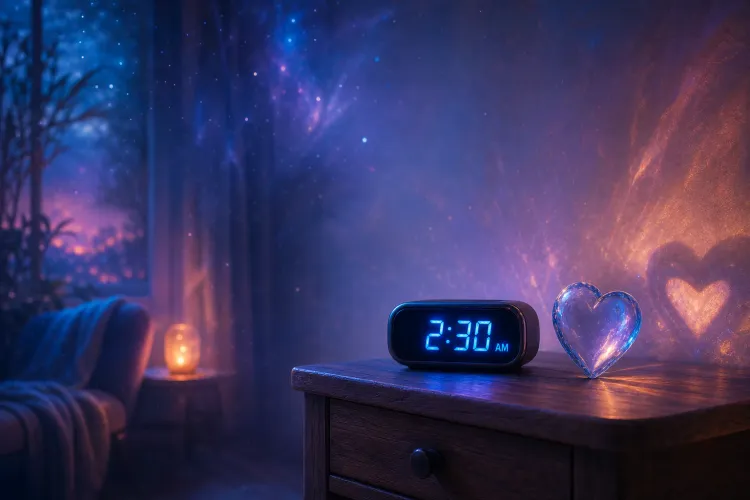
What to do at 2:36 a.m.
This is the moment nobody plans for.
You wake in the dark. The room is still. Your brain immediately offers a full report: tomorrow, money, aging parents, that weird tone in your manager’s message, the fact that you are awake again.
Here’s a plan to consider.
First, don’t check the time if you can help it. Time turns wakefulness into math.
Second, keep the lights low. Bright light can tell the body morning is approaching.
Third, don’t problem-solve in bed. If a thought is genuinely important, write a few words down and return to resting.
Fourth, if you’re getting agitated, leave the bed for a little while. Sit somewhere dim. Do something quiet and low-reward. No email. No news. No “just one” video.
Return when your body softens.
You’re not trying to punish yourself for waking up. Brief awakenings are normal. The skill is not turning one awakening into a two-hour mental committee meeting.
When sleep advice becomes too much
There is a strange point where sleep hygiene turns into sleep anxiety.
You avoid dinner invitations because they affect bedtime. You panic when the room is 2 degrees warmer than ideal. You stare at your tracker like it’s a moral report card. Every choice becomes another chance to fail at being well.
That’s the trap.
The point of sleep habits is to make life wider, not smaller.
If you’ve been struggling for months, especially if you dread bedtime, lie awake for long stretches, or feel impaired during the day, look into cognitive behavioral therapy for insomnia. The American College of Physicians recommends CBT-I as the first treatment for chronic insomnia in adults (Qaseem et al., 2016). It’s structured, practical, and focused on the patterns that keep insomnia going.
You don’t have to wait until things are unbearable. Getting help early is allowed.
A simple plan for how to sleep better at night
If you want one place to start tonight, use this.
Pick a wake time for tomorrow. Set the alarm and try to stop negotiating.
After lunch, consider skipping caffeine.
Sometime during the day, move your body for 10 to 30 minutes if that is safe and realistic for you.
One hour before bed, dim the lights a little. It does not need to be perfect darkness, just a clear shift.
Ten minutes before bed, write tomorrow’s first few tasks and any loose worries.
Put the phone out of reach.
Get in bed when you’re sleepy, not just when you’re tired of being awake.
If your mind is loud, do a body scan or slow breathing. If the bed becomes stressful, get up and reset in dim light.
That’s it.
Not glamorous. Very repeatable.
And if someone asks how to sleep better at night in one sentence, this is the closest honest answer: make the evening safer, duller, and more repeatable, then stop grading the moment sleep arrives.
Conclusion: how to sleep better at night starts with trust
Better sleep is partly logistics. Caffeine timing, light, movement, bedroom cues.
But underneath all of that is trust.
Trust that you may not need to wrestle sleep into submission. Trust that one bad night usually won’t ruin your life. Trust that rest can still count, even before sleep arrives. Trust that your body may relearn safety at night through small repeated signals.
This is slower than a hack. It’s also kinder.
Tonight, don’t perform sleep.
Close the day. Lower the lights. Give your mind one gentle place to rest.
If you want guided help with that last part, when you're ready to find a practice that fits your day, Find your meditation match. Choose a short body scan or sleep breathing session from the nighttime library. If you're learning how to sleep better at night, put the phone out of reach, let the audio do the counting, and give yourself permission to stop trying so hard.
FAQ
How can I sleep better naturally without taking anything?
Start with the repeatable basics: steady wake time, morning light, less afternoon caffeine, some daytime movement, and a short closing shift at night. If you want to sleep better naturally, don’t try to perfect all of it tonight. Pick one cue and repeat it for two weeks.
What is the best night routine for sleep?
The best night routine for sleep is usually boring enough to repeat. Write tomorrow’s first tasks, dim the lights, put the phone out of reach, wash up slowly, and do one calming practice. Ten to thirty minutes is plenty for many people. The routine should tell your body the day is closing.
How does sleep meditation help at bedtime?
Sleep meditation gives attention a simple place to land when the mind wants to rehearse, plan, or argue. A body scan, slow breathing practice, or quiet guided session may lower the pressure around falling asleep. The goal is not to force sleep, but to become less tangled.
Can calming sounds for sleep make a difference?
Calming sounds for sleep can help if they make the room feel steadier and keep you from reaching for the phone. Keep the volume low, choose something predictable, and place the device out of reach. If the audio becomes interesting enough to follow, it may be too stimulating.
Should I stay in bed if I wake up at 2 a.m.?
Stay in bed if you feel calm and drowsy. If you become frustrated, leave gently and sit somewhere dim with something quiet and low-reward. Don’t check email, news, or the clock. Return when your body softens. The point is to protect the bed from becoming a stress cue.
This article is for general information and isn't medical advice. If you have ongoing concerns, consult a healthcare professional.
Curious about where to begin? A short check-in maps your stress baseline and suggests a personalised practice plan.