
Mental exercise ideas for a steadier day


Mental exercise isn't about clearing your mind. A useful mental exercise trains attention, breathing, and self-talk for a steadier day, even when your inbox, meetings, and errands keep moving.
Last updated: 2026-07-17
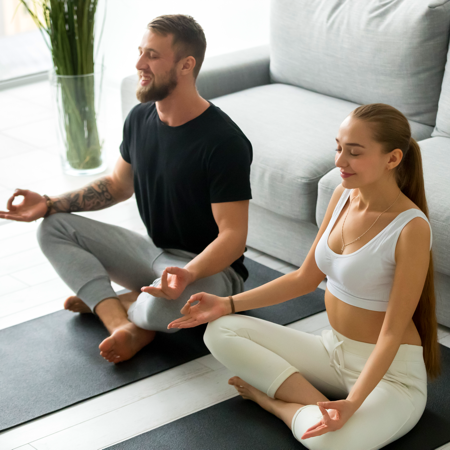
The hard part is that most people reach for a mental exercise after they're already tense. Your jaw is tight. Your browser has 17 tabs open. A simple choice feels weirdly heavy.
This guide gives you a practical routine you’re able to use in seven minutes, plus shorter options for work, home, and bedtime. We’ll cover the science in plain English, show the steps visually, and help you pick the right mental exercise for stress, focus, or an emotional reset. For a shorter companion practice, keep Slowdive’s guide to quick mindfulness exercises nearby.
Quick image guide to the routine
A visual mental exercise helps when words feel like too much. Save the sequence below, then follow it from left to right.


Use the images as cues, not rules. The goal is repeatability.
Here’s the whole flow:
- Breath check for 60 seconds
- Body scan for 90 seconds
- Focus anchor for 2 minutes
- Name the thought for 60 seconds
- Choose one next action for 60 seconds
- Close with one line of reflection for 90 seconds
Maya, a product manager in Austin, uses this between her 10:30 standup and an 11:00 client call. She doesn’t change rooms, light a candle, or put her phone in another room. She turns her chair away from the screen, starts a timer, and gives her attention one job at a time.
That’s the point. A mental exercise should fit inside a real day, not require a perfect one.
Why mental exercise works
A mental exercise gives the brain a task narrow enough to follow. That matters because stress makes attention jumpy, and attention gets worse when it has too many jobs at once.
Mindfulness practice is one researched form of mental exercise. Tang, Hölzel, and Posner described mindfulness training as working through attention regulation, body awareness, emotion regulation, and changes in self-related processing in a 2015 review in Nature Reviews Neuroscience (Tang et al., 2015). Plain version: you practice noticing, returning, and responding with less automatic reactivity.
Breathing is another route. Zaccaro and colleagues reviewed slow breathing research and reported links with autonomic nervous system balance, emotional control, and psychological well-being markers (Zaccaro et al., 2018). That doesn’t mean a breathing exercise fixes a clinical condition. It means the breath gives you a simple handle for shifting arousal.
Keep it modest. Modest works.
The most useful mental exercise ideas share three traits:
- A clear anchor, such as breath, sound, touch, or a visual point
- A short time box, usually 1 to 10 minutes
- A repeatable ending, such as one written sentence or one chosen next step
Luis, a tax associate in Chicago, used to start his workday by reading every notification at 8:02 a.m. By 8:12, he felt behind. He switched to a 3-minute mental exercise before opening email: five slow breaths, feet on the floor, one written priority. The emails were still there. His first move was steadier.
A good mental exercise doesn’t erase pressure. It changes your first response to pressure.
The 7-minute mental exercise routine
This routine is designed for a normal workday. Use it before a meeting, after a tense message, during an afternoon dip, or before you move into dinner, parenting, errands, or rest.
Set a timer for seven minutes. Sit down if you’re doing breathwork, especially if slower breathing makes you lightheaded. For panic attacks, trauma symptoms, faintness, chest pain, or distress that feels unmanageable, consult a healthcare professional.
1. Do a 60-second breath check
Start with one hand on your chest and one hand on your belly. Breathe normally for three breaths before changing anything.
Then use this pattern for the rest of the minute:
- Inhale through the nose for four seconds.
- Exhale through the nose or mouth for six seconds.
- Keep the shoulders relaxed.
- Repeat until the timer moves on.
This is a mental exercise because you’re training attention to stay with one physical rhythm. The exhale is slightly longer than the inhale, which gives the body a downshift cue without turning the practice into a contest.
A 2023 Stanford-led randomized trial compared 5 minutes a day of mindfulness meditation with three breathwork practices over one month. Cyclic sighing, which emphasizes longer exhales, produced the strongest improvement in positive affect and reduced respiratory rate (Balban et al., 2023).
Common mistake: Forcing the breath. If four and six feel strained, use three and five. Strain teaches the wrong lesson.
Decision branch:
- If you feel sleepy, breathe through the nose and sit upright.
- If you feel wired, extend the exhale by one second.
- If counting annoys you, silently say “in” on the inhale and “out” on the exhale.
Slowdive members who prefer a visual guide have 20+ patterns in Breathing Room, including box breathing, 4-7-8, coherent breathing, and physiological sigh. Choose one pattern and keep it boring on purpose.
2. Run a 90-second body scan
Move attention through the body in a fixed order. Start at the forehead, then jaw, shoulders, hands, chest, belly, hips, legs, and feet.
At each stop, ask one question: “What’s here?” Not “Why is this here?” Not “How do I fix it?” Just notice the sensation and move down.
You’ll probably find one obvious area: clenched jaw, lifted shoulders, tight stomach, cold hands. That’s useful information. The body scan turns vague stress into something specific, and specific stress is easier to work with.
Common mistake: Turning the body scan into a body audit. You’re not grading posture, weight, flexibility, or pain tolerance. You’re collecting signals.
Decision branch:
- If one area feels intense, widen attention to the whole body for three breaths.
- If you feel numb or blank, press your feet gently into the floor.
- If your mind races, name body parts out loud in a low voice.
This mental exercise pairs well with meditation techniques for beginners because it teaches the most basic meditation skill: notice, label, return.
3. Use a focus anchor for 2 minutes
Pick one anchor. Use the breath at the nostrils, a sound in the room, a candle flame, a dot on paper, or the feeling of your hands touching.
Your task is simple:
- Notice the anchor.
- Notice when attention leaves.
- Return to the anchor.
- Repeat until the timer ends.
That return is the rep. A mental exercise works the way physical training works: not through one perfect hold, but through repeated returns.
The NIH National Center for Complementary and Integrative Health describes meditation and mindfulness practices as approaches that involve focusing or clearing the mind using mental and physical techniques (NIH NCCIH). For a beginner, “focusing” is the part to practice. The “clearing” part gets misunderstood.
Your mind will wander. Good. That gives you a repetition.
Common mistake: Thinking distraction means failure. Distraction is the moment the exercise begins, because returning is the trainable skill.
Decision branch:
- If the breath feels too personal, use sound.
- If sound feels irritating, use touch.
- If eyes closed feels uncomfortable, keep eyes open and soften your gaze.
Anika, a nurse in Denver, does this mental exercise in her parked car after a 12-hour shift. She uses the feeling of her thumb against her index finger as the anchor. Two minutes later, her problems aren’t gone, but she’s less fused with the loudest thought.
4. Name the thought for 60 seconds
Now shift from focus to labeling. Each time a thought appears, give it a plain category.
Use labels like these:
- Planning
- Replaying
- Judging
- Worrying
- Remembering
- Comparing
- Problem-solving
Keep the labels short. One word is better than a paragraph.
This mental exercise helps you see a thought as an event in the mind, not an instruction you have to obey. “Planning” feels different from “I’m already behind and the whole day is ruined.” The label gives you a little room.
Common mistake: Debating the thought. Label it once, then return to the breath or your anchor.
Decision branch:
Slowdive is a calm-tech companion — guided meditations, breathing practices, and sound therapy crafted for everyday balance.
- If the same thought repeats, use the same label each time.
- If the thought feels emotionally loaded, add “this is a hard moment” after the label.
- If labeling speeds up your mind, stop labeling and return to the body scan.
This step is useful during office stress because it doesn’t require privacy. You’re able to label silently during a meeting without anyone knowing.
5. Choose one next action for 60 seconds
A steadier day needs a next move. Not a full plan. One move.
Ask: “What is the next helpful action under 10 minutes?”
Good answers are small:
- Send the one-line reply.
- Drink water.
- Stand outside for three minutes.
- Write the first sentence of the memo.
- Move the meeting notes into one document.
- Put tomorrow’s clothes on the chair.
A mental exercise that ends only in calm risks becoming another pause before avoidance. This step brings attention back into action, but keeps the action small enough to start.
Common mistake: Choosing a life overhaul. “Fix my career” is not a next action. “Open the document and write the title” is.
Decision branch:
- If you’re overwhelmed, choose a physical action.
- If you’re scattered, choose a writing action.
- If you’re angry, choose a delay action, such as saving the reply as a draft.
For more movement-based ideas, Slowdive’s guide to mental exercise with workouts links attention training with walking, strength sets, and cooldowns.
6. Close with a 90-second reflection
Write three lines. Keep them plain.
Use this template:
- “Right now I notice…”
- “The next useful step is…”
- “I’ll check in again at…”
The check-in time matters. Pick a real clock time, such as 2:30 p.m. or 8:45 p.m. The brain responds better to a concrete cue than to “later.”
This final mental exercise turns a private moment into a trackable habit. If you repeat the same three lines for 14 days, patterns start to show. You see which meetings drain you, which times of day feel easier, and which next actions actually get done.
Common mistake: Writing a full journal entry when you only need three lines. Depth is welcome on some days, but the daily version should stay light.
Decision branch:
- If writing feels like friction, record a 20-second voice note.
- If privacy is an issue, use initials or keywords.
- If you already journal, add these three lines at the top.
Slowdive’s Daily Check-In uses a 60-second morning and evening prompt to track mood trends over time. It’s useful if paper notes disappear into desk drawers.
How to choose the right exercise today
The best mental exercise depends on the state you’re in. Match the practice to the problem in front of you.
| What you notice | Best mental exercise | Time needed | Why it fits |
|---|---|---|---|
| Racing thoughts before a meeting | Longer-exhale breathing | 2 minutes | Gives attention a physical rhythm |
| Afternoon fog | Eyes-open focus anchor | 3 minutes | Trains alert attention without lying down |
| Irritation after a message | Name the thought | 1 minute | Separates the trigger from the response |
| End-of-day rumination | Three-line reflection | 3 minutes | Moves loops into written form |
| Restless body | Walking attention practice | 5 to 10 minutes | Uses movement as the anchor |
| Bedtime tension | Body scan | 5 minutes | Shifts attention from planning to sensation |
A single mental exercise won’t fit every moment. Use the smallest practice that matches the state.
For stress and anxiety, breathing and grounding practices are usually the most accessible starting points. The Mayo Clinic’s patient education describes meditation as a complementary practice that supports relaxation and stress management, not a replacement for medical care (Mayo Clinic). That distinction matters. Self-guided practice belongs beside support, not in place of it.
For focus, use anchors. The goal is not to feel peaceful. The goal is to notice when attention leaves and bring it back.
For low mood or rumination, use reflection. Write one line about what’s present, one line about the next useful step, and one line about when you’ll check in.
For social stress, use labeling. “Comparing.” “Defending.” “Rehearsing.” The label gives you a pause before you speak or send.
Kids need a different format. If you’re adapting this for family life, use shorter practices from mindfulness exercises for kids rather than asking a 6-year-old to sit through a full adult routine.
Adults usually need less theory and more repetition. Slowdive’s list of mindfulness activities for adults gives options for cooking, commuting, walking, and desk breaks.
How to make it stick at home and work
A mental exercise becomes useful when it has a trigger. Don’t wait for motivation. Attach the practice to something that already happens.
Use one of these anchors:
- After brushing your teeth
- Before opening email
- After parking the car
- Before a recurring meeting
- After lunch
- Before the first episode or scroll session at night
Keep the practice visible. Put a sticky note on your monitor with “breath, body, anchor, label, next step.” Save the image guide to your phone. Leave a notebook open to the three-line template.
Tiny is better than dramatic. A 2-minute mental exercise done 20 times beats one 40-minute session you avoid for three weeks.
Here’s a simple 5-day starter plan:
| Day | Practice | Time |
|---|---|---|
| Monday | 4-second inhale, 6-second exhale | 2 minutes |
| Tuesday | Body scan from jaw to feet | 3 minutes |
| Wednesday | Focus anchor with sound | 3 minutes |
| Thursday | Name the thought | 2 minutes |
| Friday | Full 7-minute routine | 7 minutes |
A common workplace version takes 90 seconds:
- Exhale longer than you inhale for five breaths.
- Feel both feet on the floor.
- Name the loudest thought.
- Pick one next action.
Use this before replying to a tense message. Use it after a meeting that ran long. Use it when you catch yourself rereading the same sentence six times.
Common mistake: Hiding the practice inside an ideal schedule. Put it where the messy day already is.
For a breathing-first version, use breathing exercises for calm and pick one pattern for a full week. Switching techniques every day makes it harder to feel what’s changing.
If you’re a Slowdive member, the simplest app-based setup is Daily Practice in the morning and Breathing Room before a stressful block. The point isn’t novelty. It’s giving your mind the same doorway back, again and again.
FAQ
What are good mental exercises?
Good mental exercises include longer-exhale breathing, body scans, focus anchors, thought labeling, memory games, journaling, and mindful walking. For a steadier day, start with practices under 10 minutes. Short sessions reduce friction and give you more chances to repeat the skill.
What exercise is good for stress and anxiety?
Longer-exhale breathing is a good starting exercise for stress and anxiety. Try inhaling for four seconds and exhaling for six seconds for two minutes. For intense symptoms, panic attacks, or distress that disrupts daily life, use professional support rather than self-guided practice alone.
What is the 7 minute brain exercise?
The 7-minute brain exercise is a short routine with breath, body awareness, attention training, thought labeling, one next action, and reflection. It works as a structured mental exercise because each minute has one job. Use a timer so you don’t have to track the sequence from memory.
How long does it take for exercise to help with anxiety?
Some breathing exercises shift arousal within a few minutes, while broader changes from meditation or movement usually require repeated practice. A practical target is five to 10 minutes daily for two weeks, then review what changed. Track sleep, mood, focus, and avoidance patterns.
What mental exercise is best at work?
The best mental exercise at work is the 90-second reset: five longer exhales, both feet on the floor, one thought label, and one next action. It’s discreet and specific. Use it before email, after tense meetings, or during the afternoon attention dip.
How do I know if a mental exercise is working?
A mental exercise is working if you notice the pause sooner, return attention with less effort, or choose a smaller next action. Don’t judge it by instant calm. Track repeatable signals, such as fewer rushed replies or a steadier start to focused work.
{
 "@context": "https://schema.org",
 "@graph": [
 {
 "@type": "MedicalWebPage",
 "@id": "https://blog.slowdive.app/mental-exercise-ideas-for-a-steadier-day/",
 "name": "Mental exercise ideas for a steadier day",
 "description": "A practical guide to mental exercise routines for attention, breathing, reflection, and steadier daily transitions.",
 "reviewedBy": {
 "@type": "Person",
 "name": "Dr. Lena Ortiz",
 "jobTitle": "Clinical Psychologist"
 },
 "publisher": {
 "@type": "Organization",
 "name": "Slowdive",
 "logo": {
 "@type": "ImageObject",
 "url": "https://blog.slowdive.app/logo.png"
 }
 }
 },
 {
 "@type": "Article",
 "@id": "https://blog.slowdive.app/mental-exercise-ideas-for-a-steadier-day/#article",
 "headline": "Mental exercise ideas for a steadier day",
 "author": {
 "@type": "Person",
 "name": "Nora Ellis"
 },
 "dateModified": "2026-07-17",
 "publisher": {
 "@type": "Organization",
 "name": "Slowdive",
 "logo": {
 "@type": "ImageObject",
 "url": "https://blog.slowdive.app/logo.png"
 }
 }
 },
 {
 "@type": "FAQPage",
 "@id": "https://blog.slowdive.app/mental-exercise-ideas-for-a-steadier-day/#faq",
 "mainEntity": [
 {
 "@type": "Question",
 "name": "What are good mental exercises?",
 "acceptedAnswer": {
 "@type": "Answer",
 "text": "Good mental exercises include longer-exhale breathing, body scans, focus anchors, thought labeling, memory games, journaling, and mindful walking."
 }
 },
 {
 "@type": "Question",
 "name": "What exercise is good for stress and anxiety?",
 "acceptedAnswer": {
 "@type": "Answer",
 "text": "Longer-exhale breathing is a good starting exercise for stress and anxiety, using a four-second inhale and six-second exhale for two minutes."
 }
 },
 {
 "@type": "Question",
 "name": "What is the 7 minute brain exercise?",
 "acceptedAnswer": {
 "@type": "Answer",
 "text": "The 7-minute brain exercise is a short routine with breath, body awareness, attention training, thought labeling, one next action, and reflection."
 }
 },
 {
 "@type": "Question",
 "name": "How long does it take for exercise to help with anxiety?",
 "acceptedAnswer": {
 "@type": "Answer",
 "text": "Some breathing exercises shift arousal within a few minutes, while broader changes from meditation or movement require repeated practice."
 }
 }
 ]
 }
 ]
}
Conclusion
A mental exercise works best when it’s small, repeatable, and tied to a real moment in your day. Start with the 7-minute routine: breath check, body scan, focus anchor, thought label, one next action, and a three-line reflection. Use the 90-second version on crowded days. If symptoms feel intense, persistent, or disruptive, consult a healthcare professional.
The goal isn’t a blank mind. The goal is a trained return. If you’re a Slowdive member, open Daily Practice or Breathing Room today and follow one guided mental exercise before your next work block.
Curious about where to begin? A short check-in maps your stress baseline and suggests a personalised practice plan.