
Ujjayi breathing: how to practice it safely


Ujjayi breathing often works best when the throat is doing less than the ego wants.
Ujjayi breathing, also called “ocean breath” or “victorious breath,” is a slow pranayama technique used in yoga and meditation. You breathe through the nose while gently narrowing the glottis, the opening around the vocal cords, enough to create a quiet whispering sound on the inhale and exhale. If you came here looking for how to do ujjayi breathing without overthinking it, that soft nasal rasp is usually the center of the practice.
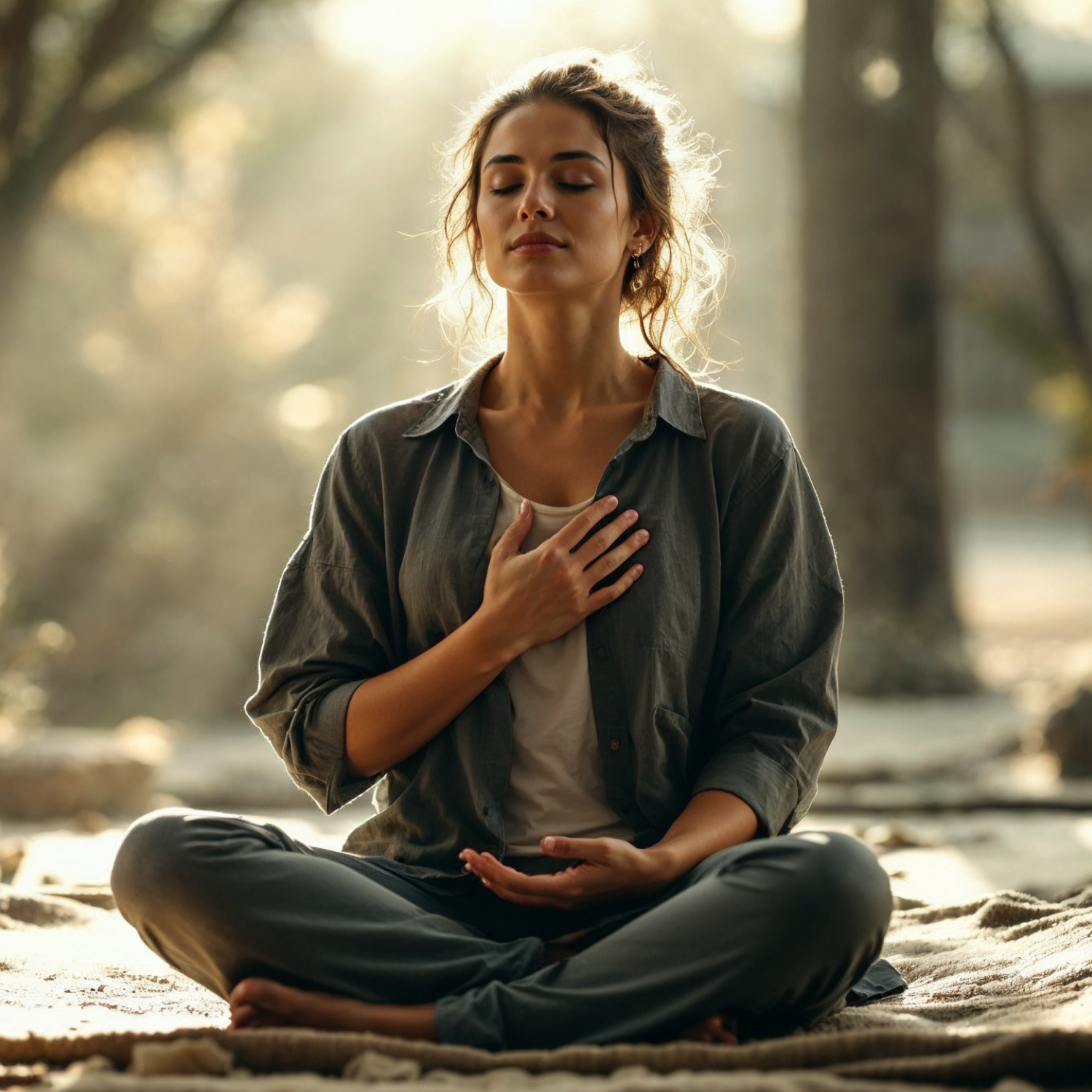
In ujjayi breathing, the useful word is gently.
Done well, ujjayi breathing can give your attention a steady sound and rhythm to track. It may slow a yoga sequence, smooth a five-minute meditation, and make a pause before opening Gmail feel less like you’re trapped with your inbox. But if you clamp the throat, chase a loud sound, or hold the breath because someone on Instagram made it look serene, it can leave you lightheaded, tense, or irritated.
For a three-minute beginner practice, simple and safe tends to beat dramatic.
Find your meditation match in 60 seconds
What ujjayi breathing actually is

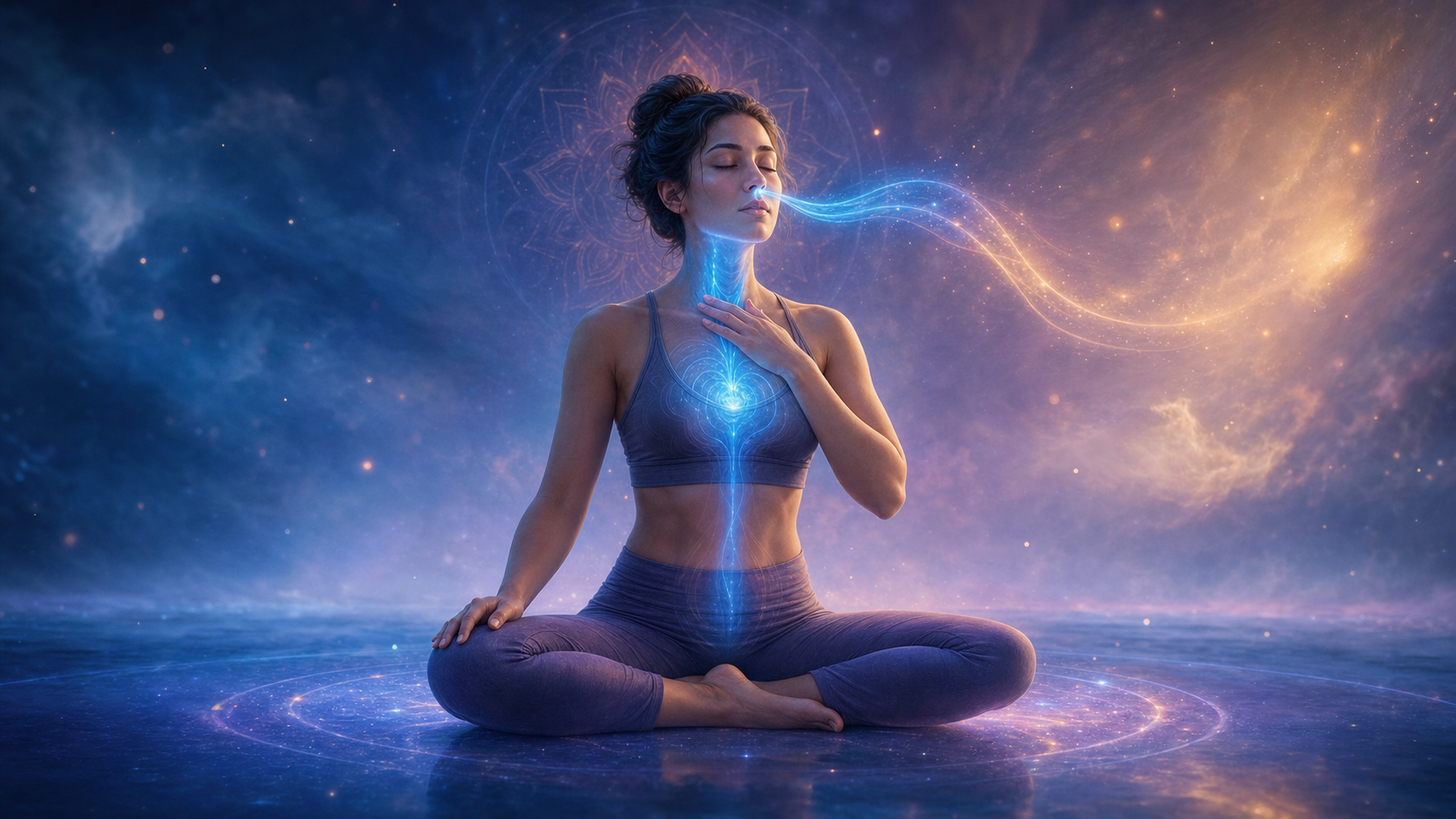
Ujjayi breathing is a form of pranayama, the Sanskrit term often translated as breath regulation in yoga. In plain English, it’s nasal breathing with slight narrowing at the back of the throat. Teachers also call it ocean breath yoga because the airflow can sound like a small wave or a quiet valve.
The easiest comparison is fogging a bathroom mirror.
Open your mouth and exhale as if you’re fogging glass after a shower. You’ll feel a soft constriction near the vocal cords. Keep that throat shape, close your mouth, and breathe in and out through your nose.
That glottis narrowing is the basic mechanism.
The sound should be quiet enough that someone across the yoga studio barely hears it.
Ujjayi breathing is often used during yoga postures because the sound gives instant feedback. If the breath becomes jagged in plank, chaturanga, or downward dog, your effort has probably gone past the useful edge. If the sound stays smooth, you have a built-in metronome.
There’s also a nervous-system reason people like slow, steady breathing. According to a 2018 systematic review by Zaccaro et al., slow breathing practices were associated with changes in heart rate variability and measures linked with emotional regulation, though the authors noted that protocols and study quality varied widely. That doesn’t mean ujjayi breathing is a cure for stress. It means slow breathing is a reasonable tool to explore.
You don’t need a grand yoga philosophy to benefit from one quieter exhale.
How to pronounce it
Pronounce the Sanskrit word ujjayi like: oo-JAI-ee.
The “jai” rhymes with “sky.” In a fast-paced vinyasa class, it may sound like “oo-jai.”
You may also hear “ujjayi pranayama” or ujjayi breath. Same family of practice. For beginners, worry less about the Sanskrit and more about whether your throat, tongue, and face feel relaxed.
Before you start: the safety rule
A useful beginner rule for ujjayi breathing is:
After a few rounds, the breath should feel quieter inside your body, not more strained.
Stop or soften if you notice:
- dizziness
- tingling in the fingers or lips
- pressure in the head
- throat burning
- anxiety rising sharply
- the urge to gasp
- chest tightness
- wheezing
A little unfamiliarity in the throat can be normal. Fighting for air is not.
If you have uncontrolled blood pressure, a heart rhythm condition, severe asthma, COPD, recent chest surgery, panic attacks triggered by breath focus, or you’re pregnant and new to breathwork, keep this gentle and skip breath holds. If you’re unsure, ask a qualified clinician before adding pranayama to your routine. For breathwork for beginners, boring and gentle is usually better than intense and impressive.
How to practice ujjayi breathing, step by step
Give yourself three minutes. Three minutes is often enough to learn the shape of ujjayi breathing without turning it into a project.
Sit upright in a chair, on a cushion, or on the edge of your bed. Let your feet touch the floor if you’re in a chair. Drop your shoulders once, then leave your shoulder blades alone.
1. Start with normal breathing
For the first 30 seconds, don’t edit the breath.
Notice whether your breath is mostly in the chest, ribs, or belly. You’re not trying to fix the diaphragm or inflate the abdomen. You’re arriving.
Take four or five natural breaths through the nose if that’s comfortable. If your nose is blocked from a cold, allergies, or congestion, wait until another time. Ujjayi breathing is easier when nasal airflow is available.
2. Learn the throat shape with an open mouth
Take one normal nasal inhale.
Exhale through your mouth as if fogging a mirror.
You should hear a soft “haaah” sound. The throat narrows slightly near the vocal cords, but the jaw stays loose. Try that two or three times.
If the sound turns into a growl, ease the throat effort by half.
3. Close the mouth, keep the same throat shape
Now close your lips.
Breathe in through the nose with that same gentle throat narrowing. Exhale through the nose the same way.
The ujjayi sound can be more obvious on the exhale than the inhale. That’s fine. Don’t force the inhale to match the volume of the exhale.
Think “whisper” rather than “snore.”
4. Make the breath smooth, not huge
A common beginner mistake is turning ujjayi breathing into big breathing. You don’t need to fill your lungs like a parade balloon.
Try this count:
Inhale for 4.
Exhale for 4.
Do five rounds.
If that feels easy, let the exhale stretch to 5 or 6. A longer exhale can feel grounding for some people, and according to a 2017 review by Russo, Santarelli, and O'Rourke, slow-paced breathing is discussed in relation to cardiovascular and pulmonary function.
But don’t make the count sacred. If 4 in and 4 out feels better for your ribs, throat, and nervous system, stay there.
5. End by dropping the technique
After a minute or two, release the throat shape.
Let the breath return to normal nasal breathing.
This exit matters. You’re teaching your body that ujjayi breathing has a clear beginning and ending, which may help prevent the “Am I breathing correctly?” loop that can make anxious people feel worse.
What should your tongue do?
During ujjayi breathing, keep your tongue relaxed.
The tip of the tongue can rest behind the upper front teeth or on the roof of the mouth, wherever it naturally lands. Don’t press it hard, curl it back, or create mouth tension to compensate for uncertainty in the throat.
If your tongue, jaw, or teeth get involved, the practice has probably become too effortful.
Reset with one ordinary sigh, then start again with a quieter glottis.
How loud should ujjayi breathing be?
Keep the ujjayi sound soft enough that it feels private.
In a yoga class, the sound may be audible to a nearby teacher. At home, you might hear it clearly because the room is quiet. In seated meditation, ujjayi breathing can be almost silent.
The point is airflow texture, not volume.
A safer ujjayi breath has a smooth, even quality. The inhale doesn’t scrape the throat. The exhale doesn’t collapse at the end.
A better image is steam leaving a mug: warm, steady, and low drama.
Common mistakes in ujjayi breathing
Breathwork attracts people who are good at effort, and ujjayi breathing tends to reward the opposite skill: reducing effort without losing attention.
Mistake 1: squeezing the throat
The throat narrowing should be subtle. If you feel scraping, burning, or pressure around the larynx, you’re probably squeezing.
Slowdive is a calm-tech companion — guided meditations, breathing practices, and sound therapy crafted for everyday balance.
Go back to the mirror-fogging exercise. Make the “haaah” sound 50% softer. Then close the mouth and keep that lighter throat shape.
Mistake 2: breathing too much air
Slow breathing isn’t the same as large breathing.
Oversized inhales during ujjayi breathing can lower carbon dioxide too much and make you lightheaded. This drop in carbon dioxide, sometimes called hypocapnia, is one reason some people feel tingly or strange during breath practices. According to the 2018 systematic review by Zaccaro et al., breathing rate, breathing depth, and carbon dioxide changes are important parts of slow-breathing physiology, not side notes.
Keep the breath medium-sized. Comfortable beats impressive.
Mistake 3: lifting the shoulders
When the shoulders rise on every inhale, the neck muscles join the breathing project.
Instead, imagine the ribs widening gently. The belly can move. The chest can move. But the collarbones don’t need to climb toward your ears.
Mistake 4: practicing through congestion
If your nose is blocked, ujjayi breathing becomes a wrestling match with your sinuses.
Skip it. Try normal mouth breathing, a short walk, or a body scan instead. If you want a less breath-focused reset, Slowdive’s guide to quick mindfulness exercises is a softer place to go.
Mistake 5: adding breath holds too early
Traditional pranayama can include breath retention, sometimes called kumbhaka. Beginners don’t need it.
Holding the breath can increase discomfort for people prone to panic, dizziness, or pressure sensations. If you’re learning ujjayi breathing for calm and steadiness, leave retention out for now.
For most people, the safer beginner formula is: inhale, exhale, repeat.
When to use ujjayi breathing
Ujjayi breathing can be useful when you want a small sensory anchor: sound, nasal airflow, and a steady count.
Before a presentation, do six quiet rounds at your desk. During yoga, use it to notice when you’re forcing a pose. In meditation, use it for the first two minutes, then let your breath become natural.
According to the NIH National Center for Complementary and Integrative Health, meditation and mindfulness practices may help with stress, anxiety, and related concerns, while the evidence varies by condition and method. Ujjayi breathing isn’t the same thing as a full mindfulness program, but it can be a doorway into paying attention.
That’s the real value for many beginners. The sound says, “You’re here.” Then you notice you’ve drifted. Then you come back.
A beginner does not need fireworks; one trackable exhale is often enough.
Should you use ujjayi breathing for sleep?
For sleep, ujjayi breathing belongs in the “maybe” category, not the “guaranteed knockout” category.
Some people find a quiet ocean-like breath soothing in bed. Others find breath focus activating, especially if they start counting breaths at 11 p.m. or trying to “do it right.”
If you use ujjayi breathing at night, try ten gentle breaths and then stop controlling the breath. Let sleep happen on its own schedule.
Do not practice strong ujjayi breathing in bed to knock yourself out. That pressure can turn rest into another performance review.
If insomnia is regular, ujjayi breathing can be one small ritual, but it shouldn’t be your whole sleep plan. Light exposure, caffeine timing, wake time, and stress patterns matter too.
Can ujjayi breathing help anxiety?
During an anxious spike, ujjayi breathing may buy you a 90-second pause rather than a complete personality transplant.
Ujjayi breathing can influence attention because the sound gives the mind a concrete object. It also changes breathing rhythm, which interacts with the autonomic nervous system through heart rate variability, carbon dioxide balance, and vagal pathways. According to the 2018 systematic review by Zaccaro et al., slow breathing practices have been linked with changes in heart rate variability in controlled settings, though results depend on the exact method and person.
During an anxious moment, a short pause can be enough. You don’t need to solve your whole nervous system. You need to interrupt the spiral long enough to choose the next step.
Try this:
Breathe in with ujjayi breathing for 4.
Breathe out with ujjayi breathing for 6.
Repeat eight times.
Then look around and name one ordinary thing you can see: blue mug, stapler, window, shoes.
The breath may help settle the tempo. The naming brings your attention back into the room. If the bigger issue is getting stuck in loops, Slowdive’s guide on how to stop ruminating can also fit the moment.
If breath focus makes anxiety worse, stop. Use grounding through the senses instead: feet on floor, eyes on the wall, one hand on the desk.
A safe five-minute ujjayi breathing practice
Set a timer for five minutes. Choose a soft bell if you have one.
Minute 1: arrive
Sit comfortably. Let the breath be normal. Feel the points of contact: feet on floor, hands on legs, seat on chair.
Minute 2: find the sound
Open the mouth and exhale “haaah” twice, as if fogging glass. Close the mouth. Keep a gentle throat shape.
Minutes 3 and 4: breathe evenly
Inhale through the nose for 4.
Exhale through the nose for 4 or 5.
Let the sound stay quiet. Relax your jaw every few rounds.
If you lose the ujjayi sound, don’t chase it. Begin again on the next exhale.
Minute 5: release
Drop ujjayi breathing completely. Let the breath breathe itself. Notice any difference in your face, chest, belly, or mood.
When the timer rings, don’t jump up immediately. Take one normal breath first.
That last ordinary breath is part of the five-minute practice.
How ujjayi breathing fits into yoga
In a flowing yoga class, ujjayi breathing can act like a speed limit.
If you’re moving from plank to upward dog to downward dog and your breath turns ragged, that’s useful information. You can slow down, lower your knees, or skip a transition. The breath becomes feedback rather than background music.
This is also where people get competitive. A room full of audible ujjayi breathing can make beginners think louder means better.
Louder ujjayi is not better ujjayi.
Your safest breath is the one you can sustain without tightening your face, throat, or belly. If a pose makes that impossible, choose the breath over the pose when you can.
Disadvantages and when to skip it
Ujjayi breathing is generally low-risk when practiced gently, but it’s not ideal for every throat, lung, or nervous system state.
Skip or soften it when:
- your throat is sore
- you have a respiratory infection
- nasal breathing feels blocked
- you feel dizzy or faint
- it triggers panic sensations
- you’re driving and it distracts you
- you’re pushing through a hard workout and need natural breathing
Also, don’t use ujjayi breathing to override pain in yoga. Breath control can make discomfort feel manageable, which is useful until it becomes a way to ignore clear body signals from a knee, shoulder, or lower back.
Pain is not a mindfulness challenge. It’s information.
The quiet test
Here’s a simple way to know whether ujjayi breathing is in the right range.
After ten rounds, ask:
Do I feel more clenched or less?
If your jaw is softer, your shoulders lower, and your breath easier to follow, you’re probably in the right range. If your throat feels worked, your head feels full, or your mind is obsessing over the count, back off.
Ujjayi breathing should feel like turning down the volume on a busy room, just enough that you can hear yourself think.
If you want guided support, Slowdive has short breath sessions where you can set a gentle pace and follow a simple audio cue without staring at a timer. Start with a three-minute breathing practice in the app, keep the sound softer than you think it needs to be, and when you're ready to find a practice that fits your day, use Slowdive’s Find your meditation match.
Curious about where to begin? A short check-in maps your stress baseline and suggests a personalised practice plan.